For my first scene analysis, searching for the animation principles at play, I'm going to start with the Superbowl 2019 spot for Toy Story 4, directed by Josh Cooley.
(The spot ran during the Superbowl 53, and marked the first Pixar Superbowl spot since 2008's WALL-E - credit: Pixar Animation Studios)
EXAGGERATION There are a couple of uses of exaggeration in this spot. Firstly, there's the duck character, Ducky, getting his foot stuck in Buzz Lightyear's helmet after going to kick him. The reaction we see afterwards showing his pain is greatly exaggerated, showing a more outstretched leg, bigger eyes, and more wild movements. Typically, Ducky has smaller features, so seeing these longer, more exaggerated ones add to the effect of pain and surprise being achieved.
A second use of exaggeration is after a previous, successful attempt at kicking Buzz. We see Buzz's head being pushed much further than possible, managing to actually clip through his body. While this technically breaks the rules a bit, it's only held for a single frame to show a more exaggerated motion.
SECONDARY ACTION There's one use of secondary action that stood out to me, at the very beginning. After an establishing shot of a carnival, we see Bo Peep looking into the distance as Woody walks up to her. As she's talking, we see her move her cane about, propping it up in a new position and rotating it around. She does this at the same time she looks around, which is her primary action.
This same shot can also see some very light secondary action from Woody, as he gestures with his hand as he responds to Bo. ANTICIPATION A major piece of anticipation can be seen when Ducky's preparing to kick Buzz. He winds it up, swinging backwards and spinning his legs before leaping forward feet first. They demonstrate the wind up by giving Ducky cartoon-like spinning legs, showing more legs than are actually there. It acts as an artificial motion blur.
STAGING The most striking piece of staging in this spot was between Buzz and the duo of Ducky and Bunny. They place Buzz below the two, and have Bunny & Ducky hanging from the top bar of the carnival attraction. This compliments the first interaction between the two, where Bunny exclaims "If you think you can take our TOP prize spot, you're wrong". This suggests a mini-hierarchy within this attraction, with Bunny & Ducky at the top; both figuratively and literally. By showing Buzz as lower to them, looking up to them even, it establishes this theme further.
- Continuing to work on morphing animation between two props from a live action film - "So with that, the first half of the animation is done! From here, the main thing to do is to go back into the Infinity Gauntlet. And now I know how to make the morph look, and in an effort to keep consistency, the next half should go by much better!" https://ncarolannua1b.blogspot.com/2019/01/sketchbook-project-norwich-castle-visit.html - Visiting Norwich Castle to do observational drawings - "And that was about it for the visit! No real set task, just "go and draw". I found it alright, but not overly exciting? Observational drawing isn't what I particularly enjoy. I'm happy enough drawing just about anything in a cartoon format, and I'm becoming more fond of drawing just people thanks to life drawing... but observational drawings of regular things aren't my favourite thing." TUESDAY - Up viewing and plot summary Original blog post: https://ncarolannua1b.blogspot.com/2019/01/narrative-up-plot-summary-and-character.html - Watched Up by Pixar Animation Studios, and give a plot summary afterwards, as well as identify Vogler's character archetypes. SUMMARY This week was a good return to form for me! I wasn't able to get as much work done over the Christmas break as I wanted, but I still got a decent amount done to act as a good jumping on point for this week. This week was strange for the Narratology side of things. Lindsey wasn't there today, so we were just told to watch Up and write up a plot summary / character archetype breakdown afterwards. I think it was mostly an exercise to see if we could identify these on our own, not just by being taught what each one was with examples like in the PowerPoints we'd used before. I also feel entirely comfortable with my choice in question and film; Question #4 about how animation influences the narrative, and Who Framed Roger Rabbit respectively. In After Effects, I continued on with my work on my morphing movie props animation. This week was a HUGE leap in terms of what I managed to get done. I struggled in Week 3, for reasons out of my control. But after some time away from the program (I wasn't able to work on the animation during Christmas, since my laptop can't run After Effects), it cleared my head and I was able to take a step back. I got back into the animation, and now it's running much smoother than it was last time! Now it's just a matter of keeping it up. The Sketchbook project this week was mostly observational drawings from the Norwich Castle visit. I found the more interesting things to draw there were the taxidermy animals, instead of the scenery and castle structure. Creatures and beings are a lot more interesting for me to draw than locations and details in them. I did give the location a go, but it ultimately didn't speak to me very much.
In this session, we watched the Pixar film Up, released in 2009 and directed by Pete Docter, current Pixar Animation Studios CCO who also directed Monsters, Inc. and went on to direct Inside Out.
(Up's official trailer - credit: Pixar Animation Studios)
PLOT SUMMARY
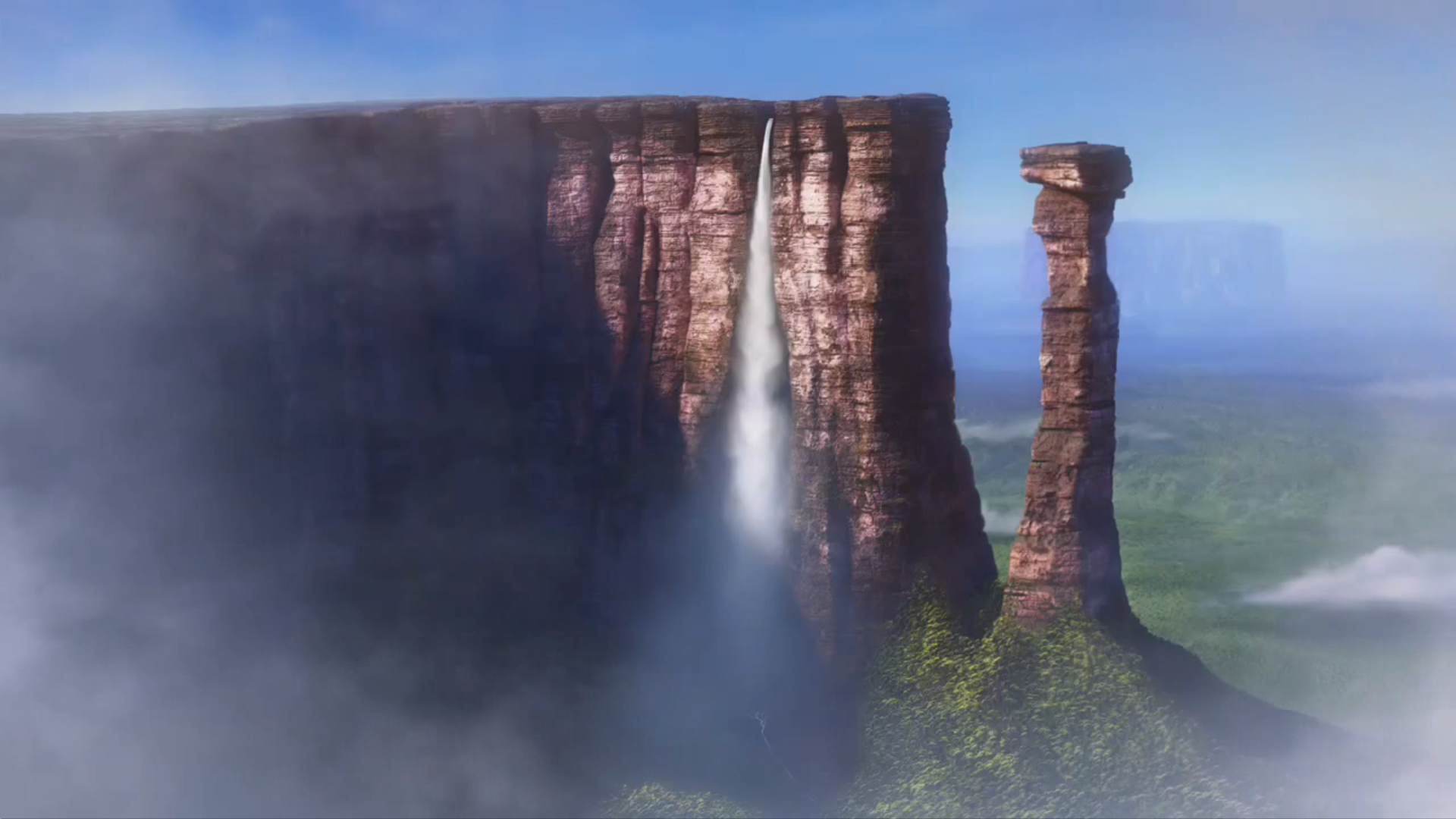
Up starts by introducing us to Carl Fredrickson and Ellie as children, whom share a love for adventure and their idol, Charles Muntz. Muntz is exploring the fictional Paradise Falls for a mysterious creature; "The Monster of Paradise Falls". Upon their first meeting, Ellie invites Carl to her adventurers club, and gives him a badge made from a grape soda cap. Ellie and Carl decide that, when they get older, they would journey to Paradise Falls and settle a house next to the waterfall. As the years pass by, we see them living out their life together; getting married, turning a run-down house into their dream home, and enjoying each other's company. After an unfortunate miscarriage, the couple decide they should finally take a trip to Paradise Falls. This dream slowly fades as they reach old age, but Carl decides to buy the pair tickets to the Falls. But before they can make it there... Ellie dies.
(The "Married Life" sequence is widely agreed to be the film's highest point - credit: Pixar Animation Studios)
After Ellie's death, Carl becomes a grumpy old man, adamant on keeping his small, cosy house in the middle of an under-construction metropolis. One morning, he's greeted at the door by Russell, a Wilderness Explorer, who offers to help Carl to get his "Assisting the Elderly" badge. After sending Russell away, Carl hits a construction worker touching, and breaking, his mailbox. This results in a court case, and Carl having to be sent to a retirement village. As some carers from the village come to pick Carl up, he unleashes over 20,000 balloons through his chimney, lifting his house off the ground, with intentions to fly to Paradise Falls.
(Carl's house takes flight - credit: Pixar Animation Studios)
During the flight, Carl hears a knock at the door; Russell was on the porch as the house took off. He's let in, but minutes after, the house runs into a lightning storm. The house is rocked around in the sky, with furniture and pictures shifting and falling. Carl passes out, but when he awakens, Russell explains that he steered the house towards South America. They drop to the ground, only barely managing the hold onto the house by the hose after being thrown out. "Where are we?" Carl asks. The fog clears, and he sees they're in Paradise Falls!
After deciding to fly the house down to the falls "like a parade balloon", Russell runs into a strange bird; 10 foot tall, colourful, and with an affinity for chocolate. Russell decides to name it Kevin, much to Carl's dismay and disapproval. Kevin follows the two around, and as Carl yells at the bird to go away, they hear a voice in the fog, which responds to them with:
"I can smell you!"
It's revealed to be a dog named Dug; the voice they heard came from a collar his master made for him to allow him to talk. After encountering Kevin, Dug claims it's the bird he and his pack are looking for, and Carl tells him to take it. But Dug ends up following along too; mostly due to Kevin following in the first place.
(Meeting Dug for the first time - credit: Pixar Animation Studios)
The group set up camp for the night, where Russell opens up about his personal life to Carl. Russell makes him promise to protect Kevin, using the same method Ellie used to make promises when they were children. When dawn breaks, Kevin is revealed to actually be a girl, who leaves the group after stealing Carl's food for her babies. Shortly after she departs, a group of dogs approach the remaining three; it's Dug's pack. They heard that Dug had the bird through their radios, and escort them back to their master. That master is none other than Charles Muntz. An ecstatic Carl and confused Russell are invited to dinner on Muntz's airship to apologise for the mix-up. During dinner, Muntz says many explorers have visited the Falls trying to take what's "rightfully [his]". It's revealed to be Kevin, and Russell spills details about her. Muntz then believes them to be more thieves, leading to a grand escape. Kevin made her way back to the house, perching on the roof, as Carl and Russell run away, leading the house with them. Dug tries stopping the herd of dogs, to no avail. Carl, Russell, Kevin and Dug jump a small canyon to avoid them, but not before the dog leader injures the now-running bird. With Kevin injured, Carl keeps his promise to protect her and get her home, so long as they hurry. But when they get there, Muntz captures the bird, and starts burning Carl's house to prevent anyone stopping him. With Kevin gone, Carl lashes out at both Russell and Dug, sending the latter of them away. Carl brings the house to the Falls, where he can finally sit inside and enjoy it. But he doesn't. He goes through one of Ellie's most prized possessions: her Adventure Book. She'd shown it to Carl as children, with blank pages saved for all her Paradise Falls adventures. But upon coming to those pages, Carl sees they're filled with pictures of their life together; their wedding photos, their picnics, even the simplest of times just staying at home. It's all ended with a picture of them sitting next to each other, with the text:
"Thanks for the adventure; now go have a new one! Love, Ellie"
(Personal note: This scene never fails to make my bawl my eyes out - credit: Pixar Animation Studios)
Carl walks outside, with a more happy outlook; but he sees Russell using a leaf blower and balloons to fly up to Muntz's airship to save Kevin. In a desperate rush to help out, Carl pushes all the furniture out his house to make it light enough to float again with limited balloons; he succeeds, and recieves yet another mid air knock at the door. It's Dug, who was hiding under Carl's porch because he loved him. Carl accepts Dug, and essentially takes him in as his new master. They save Russell after he's captured and tied up by the dogs, and Carl fights Muntz as they hurry Kevin out the ship. The four of them make it to the top of the airship, but Muntz returns with a gun. Carl holds onto the house as Russell, Kevin and Dug rush inside. As Muntz enters the house, gun cocked, Carl holds up a chocolate bar. Kevin crashes out the front window to get it, with Dug and Russell on her back. As Muntz tries to grab them, his leg gets caught on some balloon strings, and he falls thousands of feet to his death. Carl gets the other three up to safety, as they all watch Carl's house drift away.
"Sorry about your house, Mr. Fredrickson."
"You know, it's just a house."
We wrap up with Russell's badge ceremony, where Carl takes Russell's absent father's place onstage. Carl kneels down to Russell, and starts putting a badge on his sash.
"Russell... for assisting the elderly, and for performing above and beyond the call of duty, I would like to award you the highest honour I can bestow: the Ellie Badge."
Carl's given him the badge Ellie gave to him when they were children. The two hug, and go to get ice cream. We end on a final shot of the house right next to Paradise Falls, echoing the drawing Ellie had made all those years ago.
(Carl gives Russell the Ellie Badge - credit: Pixar Animation Studios)
VOGLER'S ARCHETYPES IN UP
Hero - Carl Fredrickson is, undoubtedly, the hero of the story. The simple point that he's the morally good protagonist the audience follows suffices the point, but there's other things to it as well. We see Carl's full character arc, showing his progression from a grumpy old man who enjoys his own company much more than anyone else's (barring his dead wife), to opening his heart to new people and animals. He learns to put his trust into new people in his life, and how to trust others. He learns that your idols aren't always who you dream them to be. But most importantly, he learns that the real adventure he and his wife craved was the one they were having all along; a life together. Villain - Charles Muntz is the villain of the story. He follows an, at the time, rare Pixar trend of villains starting out as characters we think we can trust, but then end up having negative coding to them. Lotso from Toy Story 3, Ernesto de la Cruz from Coco and Evelyn Deavor from Incredibles 2 also follow this trend; the only villain using it before Muntz was the Prospector in Toy Story 2. Muntz's villainous actions are mostly implied instead of outright stated; when talking about previous "thieves", he knocks over mannequin heads, implying he killed them. His collection of weapons, including swords and muskets, also hint at the more dangerous edge to him. Shapeshifter - The trend mentioned before also explains why Muntz can fit into the shapeshifter archetype as well. The dinner scene towards the end of the second act shows us Muntz's true side, as he strips the persona he's invented down. Herald - The herald isn't necessarily a person in Up, but an event; the threat of being brought to the retirement village. Carl sitting in his house the night before the carers come and get him is when he reflects, and eventually decides to make his house fly away. It could be a stretch to say his wife's death was the herald, but I feel that happens too early for it to be the direct herald. Mentor - I'd say that there are two unconventional mentors in Up: Ellie and Russell. They both give about the same amount of wisdom and guidance to Carl, but the strength and frequencies are different. What I mean by that is, Russell's mentor moments are dotted throughout the film, with little lessons all amounting up. However, Ellie's one mentor moment, being her posthumous message in her Adventure Book, has a lot more power to it. Threshold Guardian(s) - The threshold guardians are, essentially, the other dogs. One loose definition of a threshold guardian is that they're henchmen. Muntz has an army of dogs, including the main ones we follow for a little bit, Alpha, Beta and Gamma. There are about 100 other dogs too, who all acts as obstacles during the capture of Carl & Russell, the escape from the airship and Kevin's rescue. Trickster - The trickster is essentially the comic relief of the film, and I'd say that Dug and Kevin play that role. Russell would also be a considered choice, but he feels more like an ally who does funny things occasionally, it isn't a part of his function in the film. Dug and Kevin go for jokes & gags that rely on animal humour. Dug's whole shtick is that he's a dog that talks; anyone who has a dog will find the things he says funny. The rapid change in mood when he thinks he sees a squirrel, the unusual speech pattern, the happy-go-lucky naivety is all part and parcel with the dog stereotype. Kevin is more of a physical comedy character, mostly from movement. The main scene I'm thinking of is when Carl tells Kevin to scram, and she copies his dialect (somewhat) and body language. Ally - Russell is the main ally of the film. He joins the hero, Carl, on his journey to Paradise Falls (much to his dismay). He helps out where he can, such as helping to pull the house to the Falls. Russell is an ally by choice; he's somewhat aware that he's not the main focus of the trip, and he's mostly there to get his "Assisting the Elderly" badge.
MY THOUGHTS ON THE FILM
I LOVE this film. Up is a part of what I consider the "Untouchable Pixar Trifecta". Released between 2007 to 2009, there are three Pixar films I consider to be masterpieces (among their other ones), and that should be left on their own with no sequels, spin-offs, etc. This trifecta includes Ratatouille (2007, dir. Brad Bird), WALL-E (2008, Andrew Stanton) and Up. This film has characters that feel genuine, some stunning animation, and even rewatching this 10 years after it's initial release, I keep finding more and more to love! I think my favourite aspects of this film are it's moments and it's soundtrack. A "moment" in a film is a scene or sequence everyone remembers, and is commonly tied with the film; for example, The Lion King's "Circle of Life" opening or The Empire Strikes Back's "I Am Your Father" scene. Up has the "Married Life" sequence, which has been dubbed by society as one of the best fictional love stories of all time, told in just 8 minutes (including the backstory to Carl and Ellie as children). And the score by Michael Giacchino is outstanding; every track stands out, and it all feels like it fits together. No awkward change in style or genre, just all... Up. This wasn't Giacchino's first foray into a Pixar film; he also did the scores for The Incredibles, Inside Out and Ratatouille; but I think this was his best work with the studio. Up, simply put, is a perfect movie. 10/10.