Showing posts with label Week 2. Show all posts

Monday, December 10, 2018

ANIMATION PRINCIPLES - EYE OF AGAMOTTO DOCUMENTATION

One of my two chosen props for the Morphing animation is the Eye of Agamotto from the Marvel Cinematic Universe. This post is a documentation of what it is, it's various appearances and how I plan to use it in the animation.

THE EYE OF AGAMOTTO

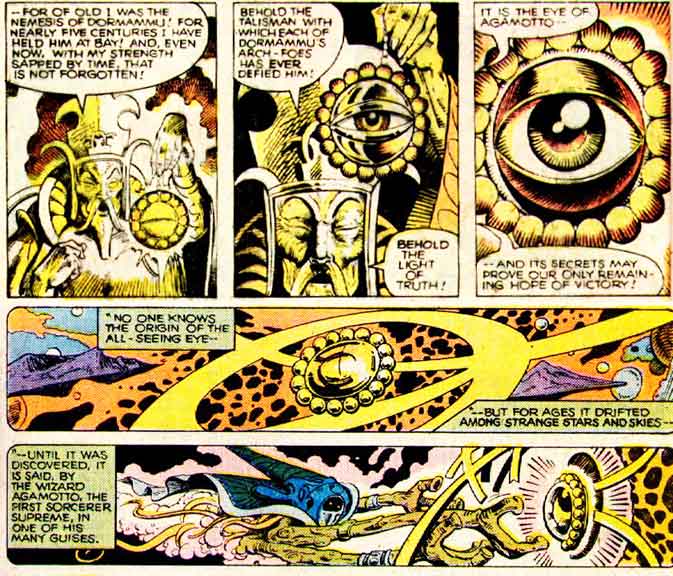
The Eye of Agamotto first appeared in Strange Tales #115, in the possession of Doctor Strange.

Image result for eye of agamotto first appearance
(The Eye of Agamotto, explained in the early comics it appeared in - credit: Marvel Comics)

The Eye's powers revolve around the supernatural and magical side of the Marvel Universe, including being able to see through illusions & disguises, look through time, and locate beings by psychic means. It can create portals and suspend objects too, but it's most recognisable purpose is just as the clasp for Strange's Cloak of Levitation.

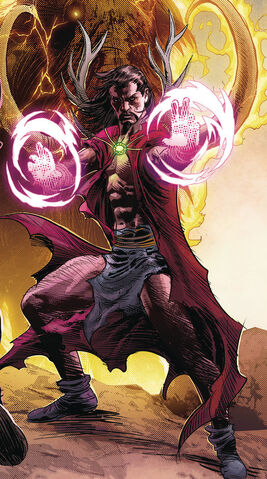
In 2017, Marvel introduced the human embodiment of Agamotto from 1,000,000 BC. He was part of the Stone Age Avengers, and was the Earth's first Sorcerer Supreme. He wears a pendant similar to the one Strange wears named after Agamotto.

File:Agamotto (Earth-616) from Marvel Legacy Vol 1 1 Deodato Wraparound Variant Textless.jpg
(Agamotto from a variant cover of Marvel: Legacy #1 - credit: Marvel Comics)

In 2016, the Eye of Agamotto was introduced into the Marvel Cinematic Universe in Doctor Strange, directed by Scott Derrickson. In this continuity, the Eye itself was just a case for one of the six Infinity Stones spread throughout the MCU; this one being the Time Stone. Using the Eye of Agamotto allows the user to control time itself; make it start & stop, slow down, speed up, and create time loops on repeat infinitely.


(Doctor Strange using the Eye of Agamotto to create an infinite time loop; every time he dies, he restarts from the beginning of the loop - credit: Marvel Studios)

The Eye later reappeared in Thor: Ragnarok (albeit without being used) and Avengers: Infinity War, in which the Eye casing was destroyed and the Time Stone was stolen from it; both actions comitted by Thanos.


The Eye of Agamotto has only had two designs throughout media; the comic design and the movie design.

In the comics, the Eye is comprised of a disc, two hollow quarter spheres, multiple small beads around the edge of the disc and the eye inside. It's completely gold, and the actual eye changes colour.

Related image
(The comic look of the Eye of Agamotto - credit: Marvel Comics)

In the movies, it's squashed down from a circle to more of an oval, with spiked edges where two semi-circles meet. There's more depth to the casing, including a hollowed out circle holding the Time Stone, two quarter spheres covering the stone (similar to the comic design), and a cross hatch design overlaying the Stone resembling the Doctor Strange emblem. Instead of acting as a clasp for the Strange's Cloak, this Eye of Agamotto more resembles a necklace, with two prongs sticking out at the top. The Eye uses different shades of gold, bronze and silver for the casing, and the Time Stone inside is green.
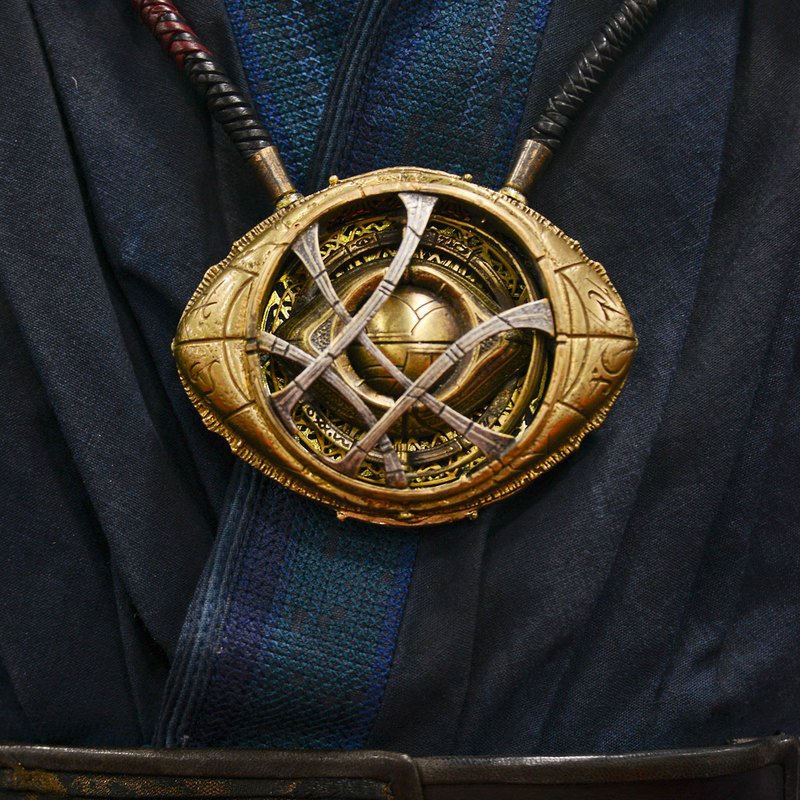
Image result for eye of agamotto
(The Eye of Agamotto from 2016's Doctor Strange - credit: Marvel Studios)

For the animation, much like the Infinity Gauntlet (see this post), I'm going to use the MCU design. The two would fit together much better than if one design was from the comics and one from the movies. The two mediums, while trying to convey the same idea of the prop, have different visual languages that aren't too compatible next to each other.

Sunday, December 9, 2018

WEEK 2 SUMMARY

WEEK BEGINNING: 3rd of December, 2018
WEEK ENDING: 9th of December, 2018

[DISCLAIMER: I missed some of this week for personal reasons. Sessions I missed will not be covered in depth.]


MONDAY - Introduction to "Guess the Movie" task

Original blog post: https://ncarolannua1b.blogspot.com/2018/12/animation-principles-introduction.html

- This was just our introduction to our "Guess the Movie" project, that's running for 4 weeks and involves taking two props from a live action movie and making them morph into each other.

- "So this project seems REALLY exciting! I love working with media I love; it's the kind of stuff I was doing before starting this course. When both your subject matter and your medium involves something you're passionate about, then you become a lot more invested in it, which is exactly what I'm going for! From here, I think asset creation is what I'm going to aim for next. The drawing tools in After Effects, the program we're making this animation in, aren't really my cup of tea. However, I'm a lot more comfortable in another vector based program, Illustrator. I could make the assets there and import them over somehow? Will have to look into that."

TUESDAY - Narratology: "Only Trouble is Interesting?"

Original blog post: https://ncarolannua1b.blogspot.com/2018/12/narrative-only-trouble-is-interesting.html 

- We discussed if stories had to have some kind of conflict, and looked at the ideals of Western storytelling standards vs Eastern ones.

- "This session was generally very interesting! Before this, I thought I had a pretty good understanding of plot structure, but I learnt a lot more that I wouldn't have known had I not attended! The most interesting thing was definitely Kishotenketsu; it's a fairly unconventional plot structure for western societies, and one I didn't know about beforehand. I really want to keep the structure in the back of my mind, so that when the time comes to make my own story, I can consider this less seen method!"

THURSDAY - (absent) After Effects session

From what I've gathered, this session was just getting a start with the "Guess the Movie" task.

SUMMARY
Getting the brief on our After Effects project was a lot more exciting than I thought it would be! I love working on projects that involve the things we love, and being a huge fan of superhero movies, I was up for working on anything that meant I could incorporate my favourite movie in it! Although it does come with the angle of it having to be done in After Effects... my experience thus far with the program has NOT been good. But I guess it's something I'm just going to have to get used to, especially if I want to be able to do the things I want to with this task.

Narratology this session was really interesting; a lot more so than I usually expect from these types of lectures. I knew beforehand there were certain formulas and tropes that stories fall into, but I never knew there were certain ones that are almost always present dependent on your location. Kishotenketsu was really interesting to look into as well! We also got the 5 question templates for our essays; I think I'm going to look at the one regarding how animation is intrinsic to the narrative. It seems really interesting, and right up my alley! It also means my ideal film of Who Framed Roger Rabbit? fits a lot more.

ANIMATION PRINCIPLES - INFINITY GAUNTLET DOCUMENTATION

This blog post is just a rundown of the one of the two props I've chosen for my morphing animation; what they are, a brief history, and how I intend to use their characteristics in the animation.


THE INFINITY GAUNTLET

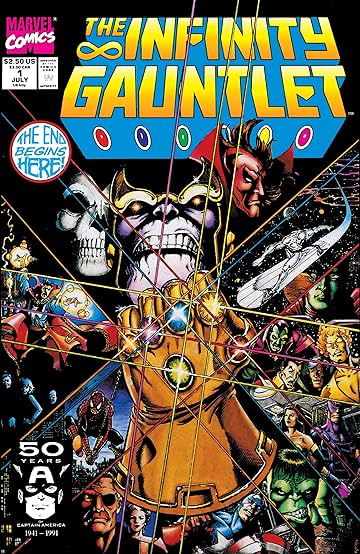
The Infinity Gauntlet first appeared in Marvel Comics in 1990, in Silver Surfer #44. It later became the main story element of 1991's mini-series The Infinity Gauntlet.


Image result for the infinity gauntlet #1
(The cover of The Infinity Gauntlet #1 - credit: Marvel Comics)

The Gauntlet was made to house the six Infinity Gems, each one controlling an aspect of the universe; Time, Space, Reality, Power, Mind and Soul. When you claim one of the gems, it grants the user the ability to manipulate whatever the gem represents; for example, using the Power Gem can be used to enhance the user's physical strength.

When Thanos assembled them all in the Infinity Gauntlet, he became more powerful than a god, and fought Earth's combined forces after eliminating half of all life to impress Lady Death, an personification of death itself.


Image result for thanos snap comic
(The iconic finger snap from Avengers: Infinity War was inspired by these panels from the first issue of The Infinity Gauntlet - credit: Marvel Comics, art by George Perez)

The Infinity Gauntlet storyline was then adapted into Marvel Studio's Avengers: Infinity War and the upcoming Avengers: Endgame. The former of the two borrowed heavily from the first 4 issues of the original comic run, including Thanos using the Gauntlet to remove half of all sentient life, a herald falling into Doctor Strange's Sanctum to warn Earth of Thanos, and an outer space assault on Thanos.


(Thanos at the end of Avengers: Infinity War - credit: Marvel Studios)

The Gauntlet has made appearances in other media, including the Avengers Assemble & Marvel Super Hero Squad Show animated series', as well as the Contest of Champions mobile game.


(Thanos with the Infinity Gauntlet in Marvel Super Hero Squad Show - credit: Marvel Animation)

Over the course of the Gauntlet's near-30 year history, it's had various different designs. It's first design, heavily utilised in the 90s, makes the Gauntlet seem like a flexible, one-piece glove with some metal elements looping around the fingers and following down to the housing for the stones on the back of the hand.

Image result for darkseid infinity gauntlet
(DC Villain Darkseid with the Infinity Gauntlet in a crossover event, showing the more flexible, almost rubber glove like behaviours of the Gauntlet - credit: Marvel Comics and DC Comics)

The modern comic design takes more cues from both the MCU's tease appearances, with more mechanical aspects and making the Gauntlet seem like real metal.


Image result for tony stark infinity gauntlet
(Tony Stark with the Infinity Gauntlet, during a 2011 Avengers issue - credit: Marvel Comics)

The Marvel Cinematic Universe took the approach of having it be designed, in-universe, by Eitri the Dwarf, who also created Thor's weapons. The design has the same visual language as the Asgardian weapons he'd designed in the past, specifically with the design of the cuff using weaves and feather patterns.

Related image
(Thanos with the MCU's Infinity Gauntlet in Avengers: Infinity War - credit: Marvel Studios)

The MCU design is what I'm going to use for the morphing animation, simply because the animation has to feature the film's props, not the comic's.

Thursday, December 6, 2018

ANIMATION PRINCIPLES - MOODBOARD AND RESOURCE GATHERING

Before doing any actual animation, I decided to make a Powerpoint to document the things I needed prepped. This included:
  • A Moodboard
  • Colour schemes
  • Colour tests
  • Sketches
I started with the moodboard, which included the Infinity Gauntlet and the various Infinity Stones in different scenarios from different movie appearances across the series.

(Every appearance of the Infinity Stones in the MCU, pre-Infinity War - credit: Marvel Studios)

Even though I was settling with the Eye of Agamotto, I thought I'd include all of them. In the films, all six Infinity Stones were revealed over the course of 7 years. In order, they are:

  • Space Stone - 2011 (Captain America: The First Avenger, The Avengers, Thor: Ragnarok, Avengers: Infinity War - encased in the Tesseract, kept in Odin's Vault)
  • Mind Stone - 2012 (The Avengers, Captain America: The Winter Soldier, Avengers: Age of Ultron, Captain America: Civil War, Avengers: Infinity War - encased in Loki's Sceptre, moved to Vision's forehead)
  • Reality Stone - 2013 (Thor: The Dark World, Avengers: Infinity War - encased in the Aether, with The Collector on Knowhere)
  • Power Stone - 2014 (Guardians of the Galaxy, Avengers: Infinity War - encased in the Orb, with the Nova Corps. on Xandar)
  • Time Stone - 2016 (Doctor Strange, Avengers: Infinity War - encased in the Eye of Agamotto, with Doctor Strange at the Sanctum Sanctorum)
  • Soul Stone - 2018 (Avengers: Infinity War - kept on Vormir, guarded by Red Skull)
The Eye of Agamotto was definitely the best choice between all six stones, due to a combination of the casing itself and how interesting it looks. As it stood before Infinity War, the only other encased stones were the Reality, Space and Power stones. But their casings were basic 3D shapes, with nothing interesting to look at with them. The other two stones, Mind and Soul, were stored in a character's head and a planet respectively, which I couldn't really do. Thus, the Time Stone, and the Eye of Agamotto casing, won out.

When deciding on potential colour schemes to use, we used the Adobe Colour website to experiment and test different combinations. The website lets users use a wheel to create their own colour palette.

I made two main colour schemes while testing what would look good; one which focused more on colour reusage based around the stones themselves, and one that focused more on the Gauntlet itself. In the end, I put opted for colour scheme 2, after seeing it work better in a Photoshop trial of the original Infinity Gauntlet comic cover. 

The final thing I decided to document was the assets I needed to create. After trying out the tools to create shapes in After Effects, I elected that it wasn't quite right for me. I think that making them in a separate Adobe program, like Illustrator or Photoshop, would be best. For each prop, I split them into their core pieces. For the Infinity Gauntlet, they were:

  • Fingers - The fingers of the gauntlet
  • Hand plate - The plate of the Gauntlet that houses the stones
  • Thumb - Similar in function to the fingers, but somewhat different in shape
  • Cuff - Where you put your arm into

And for the Eye of Agamotto, they were:

  • Time Stone - A green oval
  • Main casing - The base of the entire Eye
  • Doctor Strange emblem - A cross hatch design associated with the Doctor Strange character

All my visual documentation can be seen in the Powerpoint below.

Tuesday, December 4, 2018

NARRATIVE - ONLY TROUBLE IS INTERESTING?

This session focused on the idea of conflict in narratives, and if they're necessary or not. 

First, we went over the pre-set essay questions we can choose from. They are as follows:

  • Analyse your chosen narrative with close reference to the Hero's Journey, or another appropriate story template
  • Make a proppean analysis of an animated fairytale, and explain animation's particular suitability for telling fantastical tales
  • Stories have been described as an engine for social change. Analyse your narrative with reference to it's social or moral purpose, and the techniques used to convey this.
  • "Only available to animation". To what extent does this Paul Wells quote apply to your chosen film? Explain how the medium and materials enter, shape and define the narrative.
  • Animation is a uniquely visual medium. Analyse your chosen narrative as a successful example of visual storytelling.

I'll return to the questions at the end of the post. For now, let's focus on the main focus of the lecture: conflict vs non-conflict plots.

Conflicts in stories tend to arise from the characters, and usually specifically suit that character. The Iceberg Theory, relating to the depth of the character being found from what you can't see (like the ice underneath the water), also helps in finding the right foil for the character.


"Find a character like yourself, who will want something or not want something with all his heart" ~ Ray Bradbury

The size of the want doesn't matter, but the difficulty of achieving it is. And that's where conflict is important.

"We enjoy seeing fictional characters suffer... these basic stories... acknowledge our basic anxieties" ~ Scarlett Thomas

Plots use pathos (influencing the audience's emotions) to carry wider meanings and messages.

CONFLICT

Conflict is important to stories to bring in some interesting elements to them. No-one would want to watch a film about somebody who just goes about their life with nothing interesting or extraordinary happening. Introduce someone who challenged them to a fight one day, then you have a more engaging and interesting story.

"Stories happen because someone wants something and has trouble getting it" ~ David Mamet

We were shown a short film by Canadian filmmaker Norman McLaren, which uses pixilation animation to show the conflict of two neighbours over a flower that each claims grew in their own garden.


(Neighbours by Norman McLaren)
Generally, there are two types of story:
  • A man goes on a journey

    or
  • A stranger comes to town
And within those, there are four mythoi (genres, essentially)
  • Comedy
  • Romance
  • Tragedy
  • Satire
(Kurt Vonnegut Jr, an American writer, demonstrating story archetypes to an audience using line graphs)

Within stories, there are also acts and sequences. Most stories follow a 3-act structure;

  • Act 1 lasts about 25% of the story, and encapsulates the exposition and inciting incident. Typical films have this act last 20 to 30 minutes, and end once the protagonist sets off on their journey.
  • Act 2 lasts about 50% of the film, showing various trials and tribulations that the protagonist goes through. We typically learn about the other characters as well, and learn more details about the plot too.
  • Act 3 is the final 25% of the film, and starts just before the climax. This act is what everything's lead up to, and shows a final conflict of some kind, and a resolution.

But all these factors are for western story structures. There's another type of narrative, the eastern variation.

NON-CONFLICT

Eastern narratives tend to follow a different guideline to western ones; where western focuses on some kind of conflict and the characters having an ultimately self-driven goal, eastern stories don't have those. They eliminate worldly desires, and tend to focus on some kind of moral or just representing the everyday.

This doesn't mean conflict can't be a part of the story; it just means that it isn't there by default. The stories can be simple, like man vs nature, or complex with man vs man. The ending is typically an emphasis of the final theme.

A key term in eastern narratives is kishotenketsu. Kishotenketsu is a four part structure typical of Japanese storytelling. The four parts are:

  1. KI - The introduction
  2. SHO - Elaboration
  3. TEN - The twist (mostly represented by an unexpected change)
  4. KETSU - Emphasis

In this structure, the twist (ten) doesn't necessarily have it be related to the rest of the story.

It's important to note that these terms aren't necessarily interchangable with western story elements. For example, Sho's elaboration is NOT the same as disruption.

An example of a story that follows the Kishotenketsu structure is The Licked Hand.

KI - A young girl is home alone with her dog
SHO - An escaped convict is reported on the news, and girl won't fall asleep unless the dog, under her bed, licks her hand.
TEN - In the night, she goes to the bathroom to find her dog dead in the bath; it was dead the entire time!
KETSU - "HUMANS CAN LICK TOO" is written in blood on the wall

This session was generally very interesting! Before this, I thought I had a pretty good understanding of plot structure, but I learnt a lot more that I wouldn't have known had I not attended! The most interesting thing was definitely Kishotenketsu; it's a fairly unconventional plot structure for western societies, and one I didn't know about beforehand. I really want to keep the structure in the back of my mind, so that when the time comes to make my own story, I can consider this less seen method!

Monday, December 3, 2018

ANIMATION PRINCIPLES - MOVIE TASK INTRODUCTION

This session, we started out the main project for the After Effects unit: a looping animation, taking two props from a live action movie and having them morph into each other on a continuous loop!

First, we were all tasked to choose our favourite live action movie. I decided to go with Avengers: Infinity War, directed by Joe and Anthony Russo.


(Avengers: Infinity War trailer - credit: Marvel Studios)

Once we had a film, we had to choose two props from it. The aim, as stated before, was to make the two repeatedly morph into each other.

Infinity War had a lot of props to choose from, so I wasn't really short of choices. The most obvious one I had to do was the Infinity Gauntlet. In the film, the Infinity Gauntlet is a glove that has 6 slots to fit 6 Infinity Stones. It's coloured gold & bronze, with the only other colours coming from the stones themselves.


Related image
(The Infinity Gauntlet prop, as shown at Disney's D23 Expo - credit: D23)

The Gauntlet is the most important prop from the whole film, so it was an easy decision to include it. The other prop, however, was a difficult decision. 

The film includes many other props aside from the Gauntlet, including the casing for 4 of the Infinity Stones, Iron Man's helment, and Thor's weapon Stormbreaker. I came up with an idea for the animation which would involve an Infinity Stone remaining unchanged, with it moving between it's casing and it's place on the Gauntlet. This left me with four choices, between the four Infinity Stones. In the end, I opted for the Eye of Agamotto, which houses the Time Stone.


Related image
(The Time Stone encased in the Eye of Agamotto, from it's first appearance in 2016's Doctor Strange - credit: Marvel Studios)

I made some sketches as to how things could look, since the props needed to abstracted enough to look recognisable, but at the same time not include every single detail on them. I also had to accomodate a limited colour palette, since we were only allowed up to 5 colours.


So this project seems REALLY exciting! I love working with media I love; it's the kind of stuff I was doing before starting this course. When both your subject matter and your medium involves something you're passionate about, then you become a lot more invested in it, which is exactly what I'm going for!

From here, I think asset creation is what I'm going to aim for next. The drawing tools in After Effects, the program we're making this animation in, aren't really my cup of tea. However, I'm a lot more comfortable in another vector based program, Illustrator. I could make the assets there and import them over somehow? Will have to look into that.