Showing posts with label Narrative Research. Show all posts

Monday, February 18, 2019

WHO FRAMED ROGER RABBIT - DIRECTOR'S COMMENTARY NOTES

To look for more information on my essay points, I decided to look into the filmmaker's commentary, headed by director Robert Zemeckis, screenplay writers Jeffrey Price and Peter S. Seaman, and Ken Ralston, Frank Marshall, Steve Starkey from various departments of the film. The commentary is originally from the 2003 rerelease of the film for home media, but was included in the 25th anniversary 2013 Blu-Ray release.

During the commentary, I took notes on what I found  interesting and, more importantly, what could relate back to my essay points.

- Chaplin-esque
- Overacting is key to toon performance
- Frank - "Tex Avery style"
- Transition shot causes audience to suspend their disbelief to believe toons could walk around the 3D world
- First time "all the studios who own cartoon characters allowed them to be in a competing studio's movie"
- Hollywood segregated by humans and cartoons
- "actually about civil rights"
- "only be made if animators understand Tex Avery style"
- red car: "there has to be a real story"
- brother death is the *reason* eddie hates toons
- cartoons swearing was a "big disney problem"
- stage of club built 8ft in the air to accomodate puppeteers
- first and last time donald and daffy will ever be together
- "hungarian rhapsody"
- acme has direct link to roadrunner (YISS)
- animators included their own inside jokes
- homages / inside jokes to old animators
- jessica doesn't have a nose? or waist. not meant to seem like rotoscoping
- roger has no shoulders
- scene shot with dancer, then again without
- people were "tittering", "shocked and nervous"; breast movements, "so exaggerated as a woman it'd blow everyone's mind"
- jessica meant to look both "sexy and toony" - rz
- reverse anatomical movements; normal breasts down, jessica breasts up
- moves "very impossibly"
- richard williams "followed women"?
- ROGER FLIPPING THE PICTURES!!!
- roger animated on top of robotic arms and rigs
- toons drinking was a major discussion
- leaving imprint in the window
- combines toon music with overall score
- sober detective was the rebel that darth vader strangled in star wars. i thought that was cool.
- "[toontown was] supposed to be nuts"
- "how do you kill a toon" considered
- 2nd act starts 28 mins in
- "toon effects do physical things"
- shot like a regular movie
- judge doom's toon characteristics; chin, fake teeth, cape flapping
- doom never blinks
- originally, weasels were "mutant seven dwarfs"
- dip is made of components used to clean cels (acetone, benzine)
- not blood, red paint on doom's glove
- williams insisted on animating baby herman
- cigar was debated to be made animated or live action; the latter was chosen
- baby herman originally the villain
- jessica also the villain at one point
- acme's will is the macguffin
- squash and stretch achieved with an elastic bungee when roger's being pulled off the doorframe
- live action filming done before animation
- roger enters bottom drawer, reappears from top drawer
- lighting effects on toons would "look cool"
- toon rules
- toons always cast shadows to "make scenes a little bit better"
- articulated suction cups picked up plates and broke them
- exposure changed on roger's cels depending on lighting
- "quite a looney selection for a bunch of drunken reprobates"
- weasels *always* laugh at anyone's misfortune
- toon can't resist finishing "shave and a haircut, two bits"
- theatre shot is the longest continuous animation shot in the whole film
- moving the camera made animation easier; reverse was a myth
- collected animation cels
- cameraman knew principles of animation
- squash and stretch
- gun reflection matches poster
- never got the rights to animate felix the cat
- yosemite sam gave valiant a pistol
- drive through toontown tunnel was all miniature
- toontown is all bluescreen w/ eddie
- cartoon physics affect humans once you're in toontown
- when holding onto bar, bob hoskins was actually horizontal
- falling shot was just camera moving away really quickly
- characters stay true to their personalities; mickey wouldn't pull a cruel trick, but bugs would
- toon rule: toons will follow lines on road, smack bang into the wall
- night falls very quickly in toontown
- shadow talks to valiant
- multiplane camera used in toontown to add depth for valiant
- 3rd act begins 1hr 17mins in
- 3 films at once; 48 animated movie, a serial piece, and a special effects movie
- "understated absurdity"
- blend of looney tunes and film noir music
- toon props had to figure into the solution to the story
- doom throws valiant in "quite a toony way"
- flat doom was a stop motion puppet??? nice
- add things to make audience believe the toon stuff is in frame
- miniature doom machine going through "baby brick" wall
- debated ending with porky pig, a WB character; until tinkerbell was added


So they talked a lot more about the making of the film, over the themes of it. However, a lot of what they talk about related back to my points about certain characters, specifically Jessica Rabbit. This commentary also gave me a lot to work with in terms of talking about the film's antagonist, Judge Doom. There was a lot of things the team pointed out that I'd never noticed before; so much so I think it could be worth dedicating a paragraph to him.

Tuesday, February 12, 2019

NARRATIVE - EXPLORING ESSAY POINTS

For the Narrative essay, I'm looking at if the 1988 film Who Framed Roger Rabbit? could give
the same experience without animation. As a part of that, I'm going to have to look at how the
film embraces animation in the first place. A lot of animation quirks and trademarks serve
some purpose to the film, be it a story beat, a visual gag, or even a character's name.


CARTOON CROSSOVERS
Arguably, one of the most memorable things about this film was it's ability to bring together
both Disney characters and Looney Tunes characters for the first time. Most notable are two
scenes; the piano fight in the Ink & Paint Club (starring Donald Duck and Daffy Duck), and
the "jumping without a parachute" scene (starring Mickey Mouse and Bugs Bunny).


(This scene still marks the only official appearance of both Mickey Mouse and Bugs Bunny
onscreen at the same time - credit: Touchstone Pictures)


The complete list of characters appearing from both Looney Tunes and Disney goes on quite
a ways, but they also manage to get other cartoon characters in too; most notably, Droopy
Dog, Woody Woodpecker, Betty Boop and Koko the Clown.


Image result for roger rabbit tom and jerry
(The final scene of the film showcases many of the characters that had cameos throughout
the whole film - credit: Touchstone Pictures)


Bringing all these iconic characters from animation into the film is probably one of the
strongest ways to respect and embrace the medium. If the film had been done but instead of
Mickey Mouse, they brought in a Charlie Chaplin character, the same effect wouldn't be
achieved.
(A video essay by Eddache analysing the scene involving Donald Duck and Daffy Duck
onscreen together - credit: Eddie Bowley)


ACME
One of the secondary characters is named Marvin Acme. He owns the Acme Corporation,
who specialise in making gag gifts and cartoon props. Among his products include the
Disappearing-Reappearing Ink Pen, spring loaded hammers, and his "biggest seller", the
Hand Buzzer.


The name Acme isn't exclusive to Who Framed Roger Rabbit?. Arguably, it's most well
known from the Looney Tunes Road Runner cartoons. In the cartoons, Wile E. Coyote orders
various props, tools and contraptions from the Acme Corporation to try and catch the Road
Runner. Each thing ordered has the word "ACME" plastered onto it, and each one fails
spectacularly. Ironic, considering the wordAcme originally comes from the Greek term for
"highest point", or the best.


Image result for acme roadrunner
(Wile E. Coyote using an Acme Co. rocket to catch up to the Roadrunner -
credit: Warner Bros.)


Considering the strong connection between the types of products Acme Corporation makes
in Roger Rabbit (cartoony props and gags) and the products the Coyote uses, it's no
coincidence.


RIFFING
In cartoons, there's a technique known as riffing. It's where gags and jokes take over in place
of telling the story. These gags are typical for older cartoons from the late 20s to early 50s;
the timeframe in which the film takes place.


Who Framed Roger Rabbit? takes older, more classic examples of riffing and incorporates
them into the film, either as a small background gag or, in some instances, as entire plot
points.


The main one the film uses is the riff of dropping heavy objects onto characters; in this case,
a piano and a safe. Marvin Acme's death kickstarts the main part of the story, after a mystery
killer drops a safe on him. It's later revealed to be the same person who dropped a piano on
the main character's brother, also killing him. The gag has been used in cartoons and
animations new and old, even living on today in cartoons like asdfmovie4.


Image result for wile e coyote piano
(Wile E. Coyote after getting hit with a piano - credit: Warner Bros.)


The film also uses other animation tropes, including inanimate objects suddenly singing
(see the Singing Sword), crashing through walls leaving perfect outlines (see Roger's
outburst after seeing Jessica's pictures), and facial features transforming (see Judge
Doom's reveal).


Image result for roger rabbit singing sword
(Eddie picks up a sword to fight Judge Doom, only to see the sword start singing as Frank
Sinatra - credit: Touchstone Pictures)


SPOKEN REFERENCES / LOCATIONS
There are elements of the film embracing animation not just with the animation itself.
Scattered throughout the film, there are lines dropped by characters and locations revealed
to us that harken back to animation and it's terminology.


The best example of this is with the Ink and Paint Club sequence. Firstly, there's the name.
Ink and Paints are obviously the tools used to colour cartoon frames back when they were
still done on cels; even Roger Rabbit used cels. It also refers back to the Ink and Paint
department that was at Walt Disney Animation Studios during their early productions. During
the production of Snow White and the Seven Dwarfs, the women hired at WDAS were sent
to the Ink and Paint department, where they would paint each and every frame that the
animators created.


To enter the Ink and Paint Club, the gorilla bouncer asks Eddie for the password. He
responds with "Walt sent me." This reference is quite simple; it refers to Walt Disney.

One location significant to the plot is Toontown. In Roger Rabbit, it's portrayed as a town
somewhat anthropomorphised as a cartoon. Buildings feature faces and emote often, the
graffiti on buildings reference back to older animations, and the laws of physics are
equivalent to that of older style cartoons, where anything went.

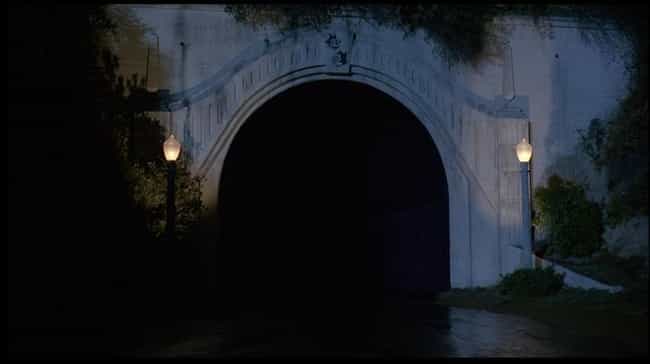
Even the entrance to Toontown from the real world features an illustration of Felix the Cat
above it'sarchway. Felix the Cat was one of the very first animated characters to show off
a personality and traits of their own.

Image result for who framed roger rabbit felix the cat
(Felix can be seen carved into the archway itself - credit: Touchstone Pictures)

The film also has a few jokes thrown in referencing back to cartoons and animation in
general. They don't serve much purpose to the story, but act as fun hidden easter eggs for
anyone looking out for them. These include:
  • Jessica Rabbit's remark of "I'm not bad... I'm just drawn that way."
  • When Roger is singing and dancing in the bar, he's doing it to the tune "The Merry- Go-Round Broke Down"; this tune is the very same that plays before Looney Tunes cartoons.
  • Betty Boop appears in black-and-white, commenting on how she's found it difficult to find work "since cartoons went to colour".

Sunday, February 10, 2019

WEEK 8 SUMMARY

WEEK BEGINNING - February 4th, 2019
WEEK ENDING - February 10th, 2019

MONDAY - Stop Motion Change of Expression

<to be added>

WEDNESDAY - Maya UV Application

Original blog post: https://ncarolannua1b.blogspot.com/2019/02/cgi-applying-textures.html

- "And that wraps up the final dedicated Maya session! I really enjoyed working on all of this, and unexpectedly so! I was worried that CGI and CG Modelling would be really intricate, and that unless you had years of experience, you would NOT get it. But it was relatively easy to get the hang of, and I really enjoyed it at times! I think CGI is definitely a path to consider going forward, especially with the Mystery Box project looming."

SUMMARY

This week didn't really have too much on, and of it, nothing was really spectacular or made me really excited. So in general, this week was pretty good. 

Maya was definitely the best part of this week. These sessions are always the most fun to be in, and I think it's a really good sign that you're loving what you're doing when people are laughing really hard at the assigned work. Not in the sense that we're making fun of it, but in that it's such a good time already working on the project with little difficulty, that spirits and laughs are high! The cereal box and bird tasks were fun, and I definitely think CGI is my route to go with the Mystery Box project we have coming up!

Stop Motion was a more interesting experience this time more than any. I was working in a group of 3 this time, and we all had a somewhat similar idea of what we wanted to make. We communicated well, and came out with an animation we were all really happy with! The most interesting thing to me was after the session, when I showed people the animation; they genuinely believed the emotion being performed. I showed people only with the context "there's an emotional change midway through"... and people felt the need to say "aww" when the sadness started. I think that's a good indication that we got the emotion down! Is stop motion for me going forward though? Maybe? It's certainly something to consider, but out of the three main animation forms (2D, CGI and Stop Motion), it's definitely falling in 3rd place.

Narratology essay is at the point where I have my points all ready to go; now I need to find more reliable sources than just my own memory. I'm going to try using a question I build around the template, going much more down the route of "Is animation intrinsic to WFRR" or "If animation was removed, could you get the same experience from WFRR". Something like that could be better in finding a point better to focus on. But if I struggle with that, then I can swap in the template question and use that to refer back to instead.

Sketchbook was back up and running this week, a lot more like previous weeks in terms of what I'm making with it. Motivation has risen again, and I'm glad that it is! I've had some ideas I've thought were really cool, including a comic that can only be viewed using a UV light; getting some more unique materials in there! Generally, getting back into the swing of it!

Sunday, February 3, 2019

WEEK 7 SUMMARY

WEEK BEGINNING - January 28th, 2019
WEEK ENDING - February 3rd, 2019

MONDAY - Maya Modelling, Stop Motion Box

Original blog posts: <to be added>

TUESDAY - Narratology Check-In

Different sort of session today; it was just me and one other person going to meet up with Lynsey and discuss our essay plans. I said that I wanted to look at how animation was intrinsic to Who Framed Roger Rabbit's plot, and that the two are practically inseparable. I suggested some points involving the character Betty Boop, the Toontown location and how certain events relied on the animation medium. In response, Lynsey offered up some of her own ideas, including some helpful advice on how to write about Jessica Rabbit. I also found from this session that the conclusion should be bigger than last time, and a lot more rich in what I'm trying to say. A helpful session! Definitely going to be applied to my essay plan.

SUMMARY

This week was pretty great! I enjoyed everything I had on, which I'm pleased with! I've already gone over how Narratology's going, so here's my final summaries on everything else this week.

The Maya modelling was, just like last week's introduction, a lot easier than expected. I really enjoyed making the assigned objects, so much so that during our break in the middle I just kept making more things to go alongside them! One thing I did find a little bit weird to get a grasp of was the colouring paired with selection tools. There'd be an instance where I thought I had the right areas selected to apply a texture, and then when I did, it would texture everything else. I already need to go back and redo the radio task, the one I had this issue with, so hopefully I can figure out what's up with it there.

Stop Motion was a lot more fun this week than last, mostly due to the workflow feeling a lot better. I was working with someone who really understood what I was trying to get at with suggestions, and I feel like it was mutual between the two of us. Armatures are a lot easier to work with than Plasticine balls on wires, surprisingly enough. They don't fall apart as easily, and you can get better looking consistent movements from them. The wire and sockets can't physically change shape like the Plasticine can, so it made animations look weird and inconsistent. Luckily, armatures don't have that, and everything went well! Main thing to remember for next time is don't knock the camera. And if you do, then don't panic for too long.

Sketchbook is still at the same point as last week, where motivation seems down for it and not very much is getting done. I don't want to force myself to fill pages, because then I'm not really putting my all into what I'm doing. But at the same time, actually getting up and doing it is what could get me back into the flow of it. I'm gonna have to try exclusively doing my comics and then hopefully adding in little things if sparks of ideas crop up.

Sunday, January 27, 2019

WEEK 6 SUMMARY

WEEK BEGINNING - January 21st, 2019
WEEK ENDING - January 27th, 2019

MONDAY - Maya introduction

Original blog post: https://ncarolannua1b.blogspot.com/2019/01/cgi-introduction.html

- "Overall, I'm really happy with both the animation and the introduction to Maya in general! Being completely honest, I was not expecting myself to find Maya as (for lack of a better term) easy and user friendly as it was; I actually understood it, unlike After Effects. Everything is laid out how I would've expected it, and things do what you want! It shares traits to other programs I've dabbled with, but in a way that makes the translation from 2D to CGI usage easy to understand! While I'm happy with the animation that came out of this session, I think I want to go back and add in more details; model in a barn, a background, and more cows to make a more interesting animation!"

TUESDAY - Narratology: Animation is a Uniquely Visual Medium

Original blog post: https://ncarolannua1b.blogspot.com/2019/01/narrative-animation-is-uniquely-visual.html

- "And that was the final lecture on Narratology! At this point, we should have a film in mind, or at least have whittled it down to 2 choices. I'm sticking with Who Framed Roger Rabbit? for my film; it fits into my chosen question format too well. From here, I need to settle on a plan of action for the essay, and do deeper research."

THURSDAY - Stop Motion introduction

<to be added>

SUMMARY

This first week for a couple of things, and I loved one a LOT more than the other.

The CGI / Maya introduction was the one I really liked! CGI was my introduction to animation, and watching films like Toy Story and Shrek really inspired me to go into animation. I learnt later on that CGI was allegedly very difficult, even the simplest things. But now I've done the simplest things and discovered that they weren't too difficult, it puts my mind at ease a LOT. Despite only having one session on CGI, I feel like I've absolutely fallen for it; definitely a medium I'm looking forward to doing more of!

Stop Motion... isn't as enjoyable as I imagined, or as I remember from past experience. The process is a lot more fiddly and complex than I recall, and you really need a good sense of patience when you do it; and I'm willing to admit one of my faults is lack of patience. Maybe this session with the bouncing ball was a one-off? Things kept falling apart, and injuries were almost sustained (luckily, no-one was actually hurt). When we move onto armatures, hopefully it'll be less... personally frustrating.

We've ended our traditional lectures with Lynsey now, and this last one was somewhat helpful. It covered a few points that I could apply to my Who Framed Roger Rabbit themed essay, but nothing overly helpful like last week. The presentation was more so on how animation tells a story visually, but not handy in my essay exploring how animation is used in conjunction with the plot itself. If anything, this session was most helpful in solidifying that, now everything's concluded with lectures, I should really sit down and put my points down in concrete.

Sketchbook project this week has been a bit down, a combination of being busy with the work this week and, being completely honest, a lack of motivation. I feel like I burnt myself out on it the past two weeks getting things done, that I've subconsciously gotten tired of the sketchbook. I still pick it up every so often for a little scribble on the page, but not much else. I'm sure the motivation will come back.

Saturday, January 26, 2019

NARRATIVE - "WHO FRAMED ROGER RABBIT?" AND STORY BREAKDOWN

This post is focusing on my chosen film for the Narrative essay. My film is Who Framed Roger Rabbit?, released in 1988 and was directed by Robert Zemeckis.

(Who Framed Roger Rabbit?'s trailer - credit: Touchstone Pictures)

The film stars Bob Hoskins as Detective Eddie Valiant, Christopher Lloyd as Judge Doom and Charles Fleisher as Roger Rabbit.

The story is set in 1947, in a world where humans and cartoon characters, referred to as "toons", co-exist. P.I. Eddie Valiant is hired by famous cartoon director R. K. Maroon to investigate the wife of one of his biggest stars, Roger Rabbit, after a series of poor performances. Valiant, despite being a notorious toon-hater, takes the job and manages to sneak a few shots of Rabbit's wife, Jessica Rabbit, spending time with another man. Roger runs off after being shown the photos in a fit of rage and jealousy.

The next day, we find out the man Jessica Rabbit was seeing, Marvin Acme, had been killed by a toon; they dropped a safe on his head. Roger is the main suspect in the case. Valiant meets with Judge Doom at the crime scene, who announces that he's created a toon-killing chemical called Dip. Doom is the highest bidder on Toontown, and threatens that toons who don't respect the law will face the Dip.

Upon returning home, Valiant discovers Roger broke into his apartment, pleading his innocence. Valiant reluctantly agrees to help prove it, by finding Marvin Acme's will, a missing piece of evidence in the murder case. The will outlines that Toontown would belong to the toons for eternity, and would block Judge Doom's plans. Roger is hidden in a bar run by Valiant's friend, as Jessica Rabbit meets Valiant later to also plead Roger's innocence. Roger is eventually found at the bar by Judge Doom and his gang of weasels, only for Valiant to save him at just the last second. The two jump into a cartoon taxi and make their getaway.

They lay low at a theatre for a bit, where Valiant reveals his past to Roger; he was a part of a detective duo with his brother Teddy, until a toon dropped a piano on his head and killed him. Valiant then starts putting together that Doom's company bidding on Toontown also bought out Maroon Cartoons. Confronting R. K. Maroon, he confesses that he only sold the studio out of fear for the toons' safety... and then he gets shot.

Valiant sees Jessica fleeing the scene, and follows her straight into Toontown. After some hi-jinks in Toontown, the two bump into each other where Jessica explains Doom killed Maroon, and that she had Marvin Acme's will all along... only to find it blank. The weasels then find Valiant and Jessica, and take them to the Acme factory.

At the factory, Doom reveals his intentions; after buying the public transportation in California, as well as Toontown, he plans to steamroll & "Dip" the town to create a freeway. Roger suddenly bursts in, launching an unsuccessful rescue attempt which only ends in him and Jessica being tied up and aimed at with Dip. Valiant defeats the surrounding weasels operating all the machinery that would put the plan into action, performing a variety of vaudeville stunts and cartoon gags; they die of laughter.

One of the now loose machines flattens Doom, only for him to reveal he was a toon all along. And not just any toon... but the one that killed Valiant's brother. The two fight each other using various toon weapons, but Valiant ultimately gets the final blow when he strikes Doom with a high pressure hose of Dip. Doom dissolves away. The steamroller crashes through the wall leading to Toontown, only to be destroyed by a train.

Roger starts reading out a love poem he wrote on a seemingly blank piece of paper on the night he found out about Jessica seeing Acme. Turns out the paper was Acme's will, written in his trademark disappearing ink. Roger and Valiant now see eye to eye, as everyone happily walks into Toontown.

Tuesday, January 22, 2019

NARRATIVE - "ANIMATION IS A UNIQUELY VISUAL MEDIUM"

This session was our final dedicated lecture looking at our Narratology project, and looked at how animation works with it's visuals, and how the medium can bring forward stories that can't be presented any other way.
"People keep saying 'the animation genre'. It's not a genre!" ~ Brad Bird, director of The Incredibles, Ratatouille and The Iron Giant.
Like the above quote suggests, animation in itself isn't a genre like a sci-fi or a horror. Animation is a medium.

A medium is the means or method of conveying information. In the arts, there are many different mediums: painting, photography, fashion, film-making... and animation. Animation is mostly considered a genre by the general audience as films made for young children and nothing more. However, animation has been used to get across more than just those types of films. We've seen hard hitting social commentary, risque shorts, and even entire movies & TV series with an adult only orientation.

(South Park has been running since 1997, using animation to show a variety of vulgar, controversial actions and commentaries - credit: Comedy Central)

Animation encompasses a wide range of styles and stories, the latter of which may not even be able to be told without animation. The medium can be intrinsic (vital) to the narrative.

This is where a comparison of Content and Substance comes in. The two can be respectively paired with Story and Discourse, and represent two factors of the story:

  • Story / Content - what's told
  • Discourse / Substance - how it's told

The substance of an animated film can be just about anything. Through this, we can use animation to tell unique stories that other mediums can't.
"Implicit in the study of the animated form is how 'meaning' is generated by the unique vocabulary available to the animator, which is not the province of the live-action film-maker" ~ Paul Wells
An example of a somewhat exclusive technique to animation is metamorphasis. Cartoons from the mid-1920s to later 1930s used the Rubberhose style, which involved metamorphasis for more comedic effect.


(Snow-White by the Fleischer Brothers and starring Betty Boop incorporates metamorphasis during certain sequences, including the Queen's head turning into a frying pan with two eggs. The short also uses rotoscoping during the Saint James Infirmary Blues sequence ~ credit: Fleischer Brothers)

Another technique animation uses is fabrication. In this context, fabrication means to take existing materials - be it natural or artificial - and reinterpret them within an animated film.


(Bottle by Kirsten Lepore uses fabrication with the items the sand and snow people send to each other - credit: Kirsten Lepore)


(Wladyslaw Starewicz's The Cameraman's Revenge took dead insects from a previous project of theirs, and repurposed them to be animated puppets; audiences were amazed, and considered Starewicz to be more like a magician than a film-maker - credit: Wladyslaw Starewicz)

Animation, as briefly mentioned before, can be used to show more daring subjects & imagery with the facade of a cartoon. Many people associate cartoons and animation with their childhood; moreso, innocence. So seeing horrific actions played out through a cartoon would make it seem a lot better than it actually is.


(Tex Avery's The Cat That Hated People continually shows abuse towards the titular cat; horrific if shown in live action, but played for laughs in animation - credit: Metro Goldwyn Mayer)

The Cat That Hated People also follows the carnivalesque rule animation can incorporate. It essentially means that normal rules are disabled, reversed or altered. It's usually applied to emphasise humour, satire or grotesquery.

One very important element to animation is it's visual storytelling.
"If it's a good movie, the sound could go off and the audience would still have a perfectly clear idea of what's going on." ~ Alfred Hitchcock, director of Psycho, amongst others
The film-making rule of "show, don't tell" is also applicable to animation. You should plant hints and clues to things, or just straight up show them instead of having things be disclosed through just dialogue.

Roland Barthes stated there were 5 Narrative Codes, two of which we discussed; first there's the Hermenautic Code. This code is when you build mystery & suspense, posing questions that only the narrative can answer. For example:

  • "What happens after death?" is NOT a Hermeneutic question
  • "After her death, Jane found her day-to-day activities become much more interesting" IS a Hermeneutic question; only the narrative following and/or preceding it can answer this for us.
Linked to this is also Casual Connection and Ellipsis.

Casual Connection is when two random words or images are put side by side. By default, our brain will try and guess what the correlation is through some kind of mini narrative. For  example, showing the words BANANA and VOMIT next to each other. When asked in the lecture what the link would be, the unanimous answer was "it's a bad banana". 

Ellipsis is related in that it's the deliberate omission of what the correlation is, leaving the audience to figure it out themselves with context clues and/or later surrounding actions.
"Explanation kills drama" ~ John Yorke
A smaller, somewhat similar code is the Cultural Code. It involves the audience filling in the gaps that the ellipses creates with their own experiences. 

We also looked at the Kuleshov Effect. The effect is simple; you take three shots; one of a person looking at something, one of what they're looking at, and finally one of their reaction. When you replace the middle clip with something else, the final reaction shot can take on a whole new meaning.

(Alfred Hitchcock explaining the Kuleshov Effect - credit: CBC)

Older texts that use these techniques may be more difficult to read into, given that you may need proper historical context.

Finally, we looked at Narrative Statements.

In a narrative, there are two types of statements it can bring up:

  • Process Statement - something that is done or happens
  • Stasis Statement - something that simply is or just exists
We finished off by watching an animation that takes the "show, don't tell" rule to it's extreme, by telling a 22 minute story with nearly no dialogue.

(The Old Lady And The Pigeons only has dialogue in it's opening and closing minutes; the main storyline features no dialogue whatsoever - credit: Sylvain Chomet)

And that was the final lecture on Narratology! At this point, we should have a film in mind, or at least have whittled it down to 2 choices. I'm sticking with Who Framed Roger Rabbit? for my film; it fits into my chosen question format too well. From here, I need to settle on a plan of action for the essay, and do deeper research.

Sunday, January 20, 2019

WEEK 5 SUMMARY

WEEK BEGINNING - January 14th, 2019
WEEK ENDING - January 20th, 2019

MONDAY - After Effects continuation

Original blog post: https://ncarolannua1b.blogspot.com/2019/01/animation-principles-iteration-3.html

- "At this point, I'm really happy with how this is coming along! It's looking as smooth as I wanted it to, with the only thing I need to fix at this point already being mentioned. This post was mostly about the build up to turning back into the Gauntlet, but the actual transformation is what's next."

TUESDAY - Narratology: The Hero's Journey

Original blog post: https://ncarolannua1b.blogspot.com/2019/01/narrative-heros-journey_15.html

- "There wasn't too much that spoke to me in terms of the films or questions I have in mind, apart from one aspect of the non-conventional narratives; specifically, the evolution of materiality. I want to explore how animation can be integrated into the narrative, and seeing an unconventional structure with that very idea could be useful to look into!"

WEDNESDAY - After Effects continuation

Original blog post: https://ncarolannua1b.blogspot.com/2019/01/animation-principles-final-iteration.html

- "So that's it for the morphing animation! I'm really happy with how it came out! The colours, animation and visuals all match what I want, and it even made me get along with After Effects a little bit more! I feel like if there wasn't a restriction on the colour palette (maximum 4 colours), then I could've presented a more accurate Infinity Gauntlet, just in terms of bringing in more Infinity Stones. That was the only real part of the brief that limited me, everything else I was fine with!"

THURSDAY - TINE KLUTH STOP MOTION INTRODUCTION

<to be added>

SUMMARY

This was a good week! I got a satisfactory amount of work done, and it was a great way to segue from the first part of BA1b into the second, with each half of the week being somewhat dedicated to each.

I finished my morphing animation! I spent a lot of time just working on it this week, I had a lot of motivation all of a sudden! I'm really happy with my end result; a phrase I should stop using so often, but that's the only way I can really put it! The visuals and motions are all clean and look really nice in my opinion! I got some positive feedback from some peers, and any advice they gave was very helpful and immediately got implemented into the animation (if I saw eye to eye with them on it).

Narratology this week was unexpectedly helpful in it's subject matter. I don't plan on doing my essay about the Hero's Journey, but there were some parts towards the end of the lecture that are going to be very helpful when talking about Who Framed Roger Rabbit. Specifically, there was a term we learned about at the end regarding riffing, an animation narrative type where gags and jokes take over story. In my chosen film, riffs are used as full on story beats, so definitely one to keep in mind going forward!

My sketchbook was more doodles than anything this week. I've been trying to treat this less as a uni task, and more so as just another one of my own personal sketchbooks; and that attitude has been helpful with filling up sketchbooks! I've also looked back on sketchbooks of mine from 2013-2016, seeing what kinds of things I drew there and if I could recapture the same kind of things I was doing then.