Making comics is nothing new to me; I've been making them since I was 12, albeit with varying levels of quality. My main inspirations for my comics was the Big Nate series by Lincoln Pierce. They've been running in newspapers since 1991, and feature four panel comics every day (apart from Sundays, which warranted a longer, full colour comic).
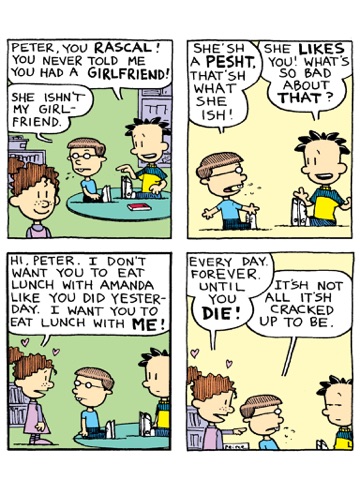
(An example of a standard Big Nate comic - credit: Lincoln Pierce)
I started making comics in 2012, with a character named Nerdy. I used the character for comics all the way up until 2014, making them both on paper and in a digital medium. I took cues from comics like Big Nate, trying to tell a full story or deliver a joke in just four panels.

(A Nerdy comic from 2013)
That's my general experience with comics. I looked back at both these sources when I started my comics for the sketchbook projects, discovering there was a rhythm that most four panel comics use:
- Set up joke, slight tease
- Elaboration
- Joke payoff (recompense / explaination)
- Reaction
I subconsciously included this format in every Nerdy comic I'd done, so much so that it kind of became second nature. This formula also carried over to the comics I did in my sketchbook, although I tried to stray from the formula throughout.
Another thing I tried to do with my sketchbook comics was to try and use more unconventional panel structures, relating them to the theme or joke being pulled off. For example, one of the comics involves music as a theme, so I tried to make the panels out of a music note divided into four pieces.
And here are the comics I created!


No comments:
Post a Comment